This transcript follows the expanded Webstock 2011 version of a talk first given at dConstruct in 2010. The speaker notes have been lightly edited for reading, while the original sequence and artwork have been retained.
Hi there, I’m Tom Coates. Thank you for having me! What I do on the whole is look towards what’s going on in the web, try and trace out the potential and then try and work towards making that future real. When it goes well, it’s a pretty amazing job and I consider myself very lucky indeed.

So I’m here today to try and give you some context on the project that we’ve undertaken together. And I’m here to try and energise you to see a small part of our place in history. Most importantly I’m here to present to you guys a call to arms - a call to go out there and make more and more amazing things with the tools at your disposal.
Fundamentally I’m going to be talking about networks. I’m going to be talking about how the network of the web is changing, evolving, interconnecting in new ways - and how it’s breaking free from the browser and stretching into our physical environment.

I’m going to be talking about how I believe this new network we’re building between services - physical or otherwise - will transform the world and the things that we build.
And I’m going to try and touch on some of the things that we need to think about while we’re collectively creating the future.
But to give you some context, I’m going to start off by talking about another transformative network - a very old one - constructed in Ancient Persia, two and a half thousand years ago...
This is the Persian King Darius the first. He ruled over a vast empire that stretched across modern day Macedonia, Iraq, Iran, Afghanistan all the way down through Israel and into Northern Egypt.
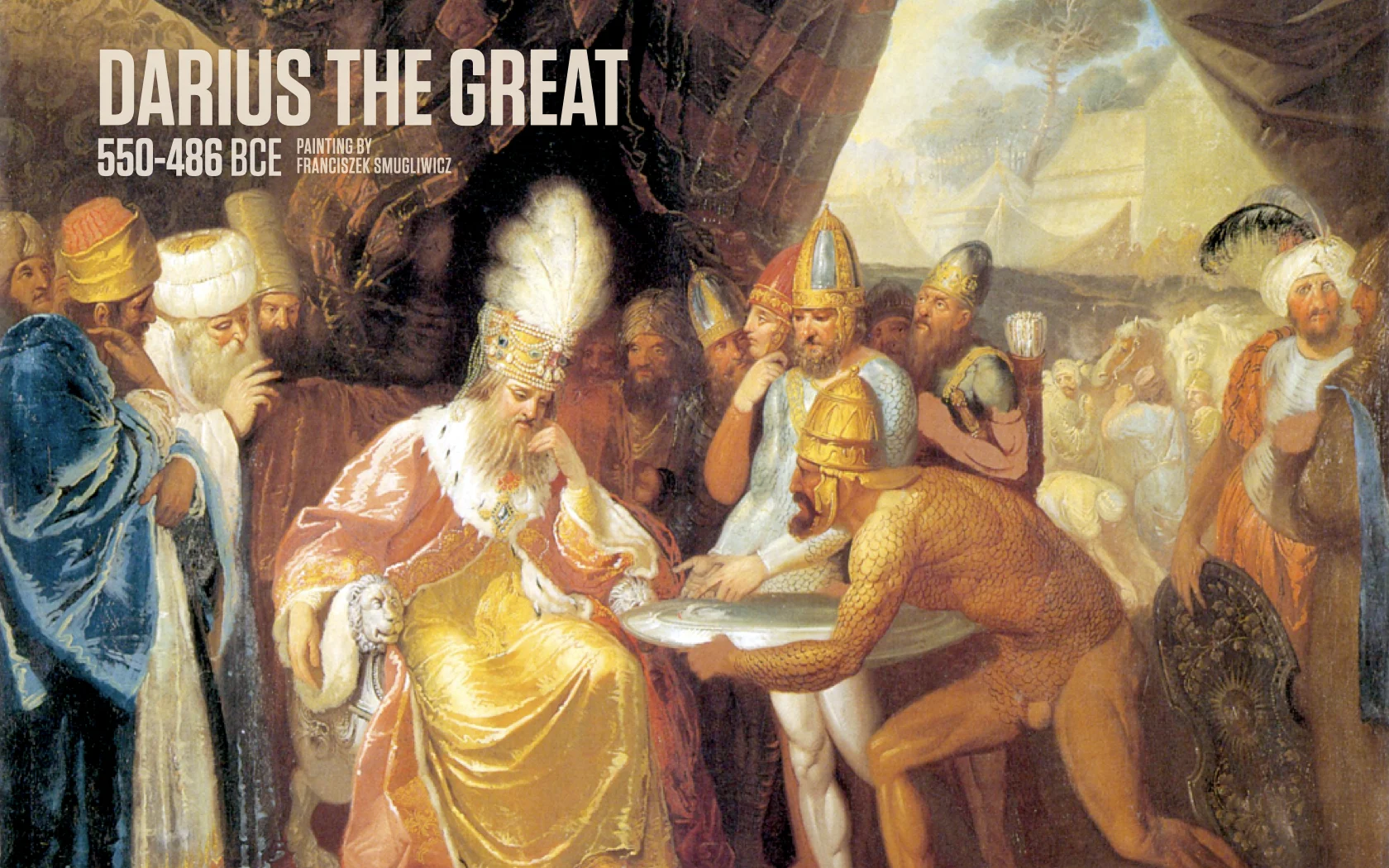
Mostly today he’s known for continually trying to invade Ancient Greek city states like Athens and Sparta in wars that went on for generations. You may have seen a rather unfortunate portrayal of his son Xerxes in the film 300 - although you may have been distracted by Gerard Butler waving around a sword while wearing a leather codpiece.
Focus Tom. Anyway, where was I? Darius the Great. Darius also known for another thing - the construction of one of the world’s first great road networks.
Below is a map of his empire. Remember - this is around two thousand five hundred years ago. As you can see, it covers a huge area. On top of that territory you can see the road network that he constructed. According to contemporary sources and modern archaeologists, this road network stretched over several thousand kilometers and united dozens of disparate peoples.
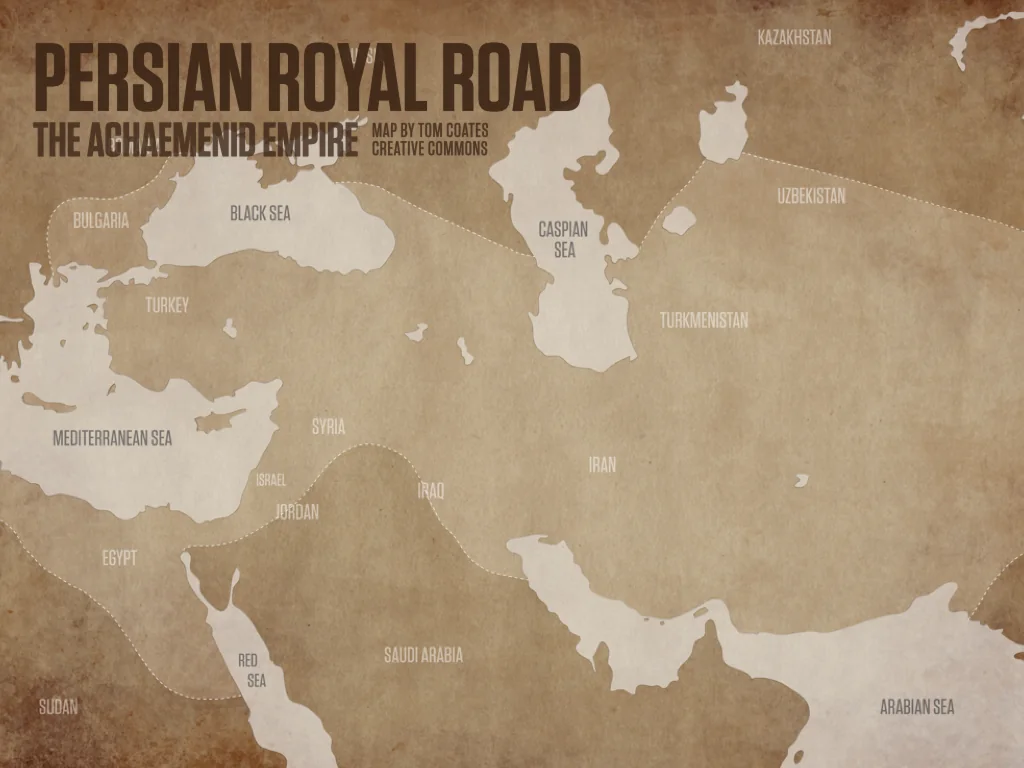
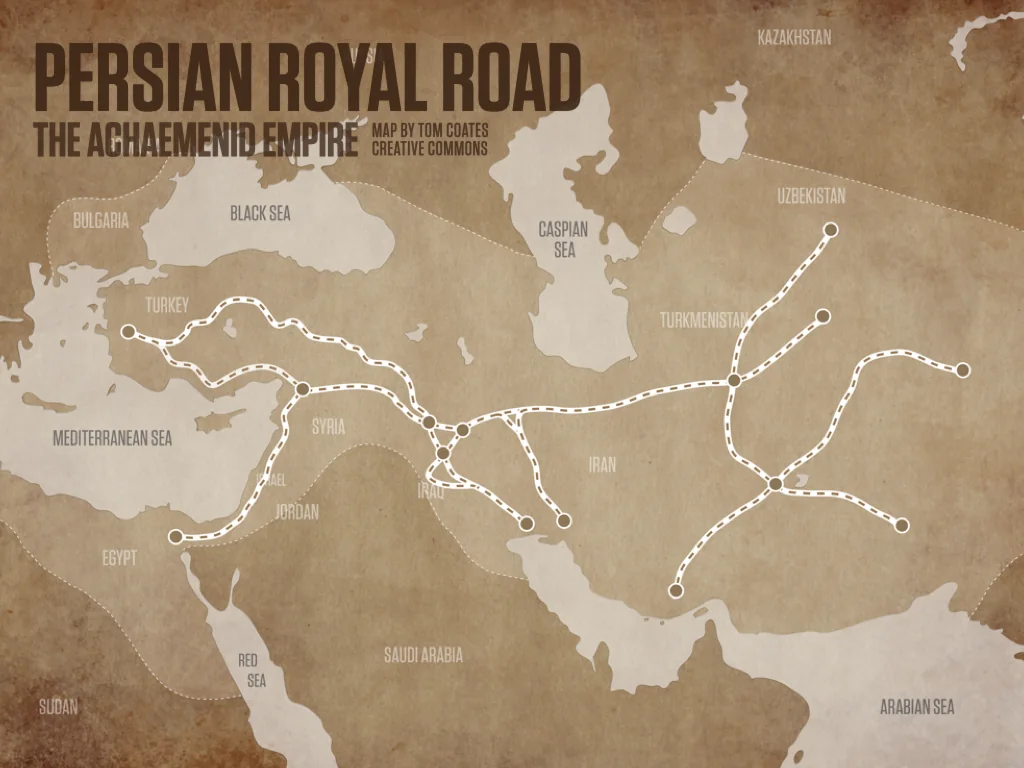
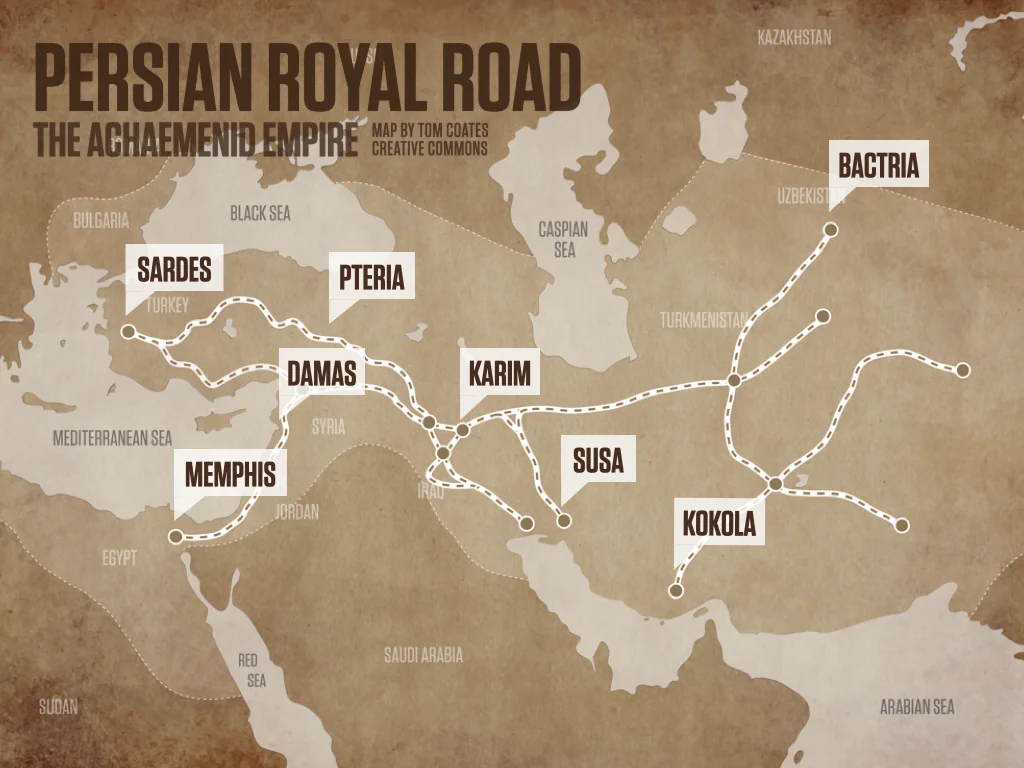
Along the network stood towers, manned with messengers on fresh horses, ready to move at a moment’s notice should a message come in. When confronted by narrow valleys that were slow to navigate with horses, towers were built on either side so that messages could literally pass between them at the speed of sound, simply by being shouted.
It was so effective that armies that were thirty days march from Susa could get their orders in the same day.
This road network, then, was not only an effective way of moving materials, trade and armies across this huge empire, it was also a way of spreading news and orders. If you’ll forgive me the cheese for me a moment, this was, in a very real way, the world’s first information superhighway.
I bring up the Royal Road because it illustrates some really significant points.
Firstly that infrastructural networks can be completely transformative. There’s no way that such a large empire could be managed effectively without such a system in place.
Secondly it demonstrates that a transformative infrastructure is not an end unto itself. Darius’ project to wire together physical space made a communications network possible. And communications networks in turn make other things possible.
The history of human progress could be said—at least in part— to be a history of infrastructures like these, many built on the work that others have done before.
Finally I chose to talk about transport because of the way, over the last few thousand years it has transformed how we work, and particularly how we make things, and because I think a similar change is happening on the web.
Before efficient transport came along and trade came along, what you could build was limited to the resources around you. Every built object had to be made of local materials, with locally made tools, the raw materials retrieved, and the components made and assembled by local people.
Over the last few thousand years the world has changed dramatically. It’s been wired together - with road, sea, rail and air networks. Trade and exchange has connected our world, and made new things possible. From Ancient Egypt, through the Silk Road and the Industrial Revolution to the present day, transport and trade has made our world possible.

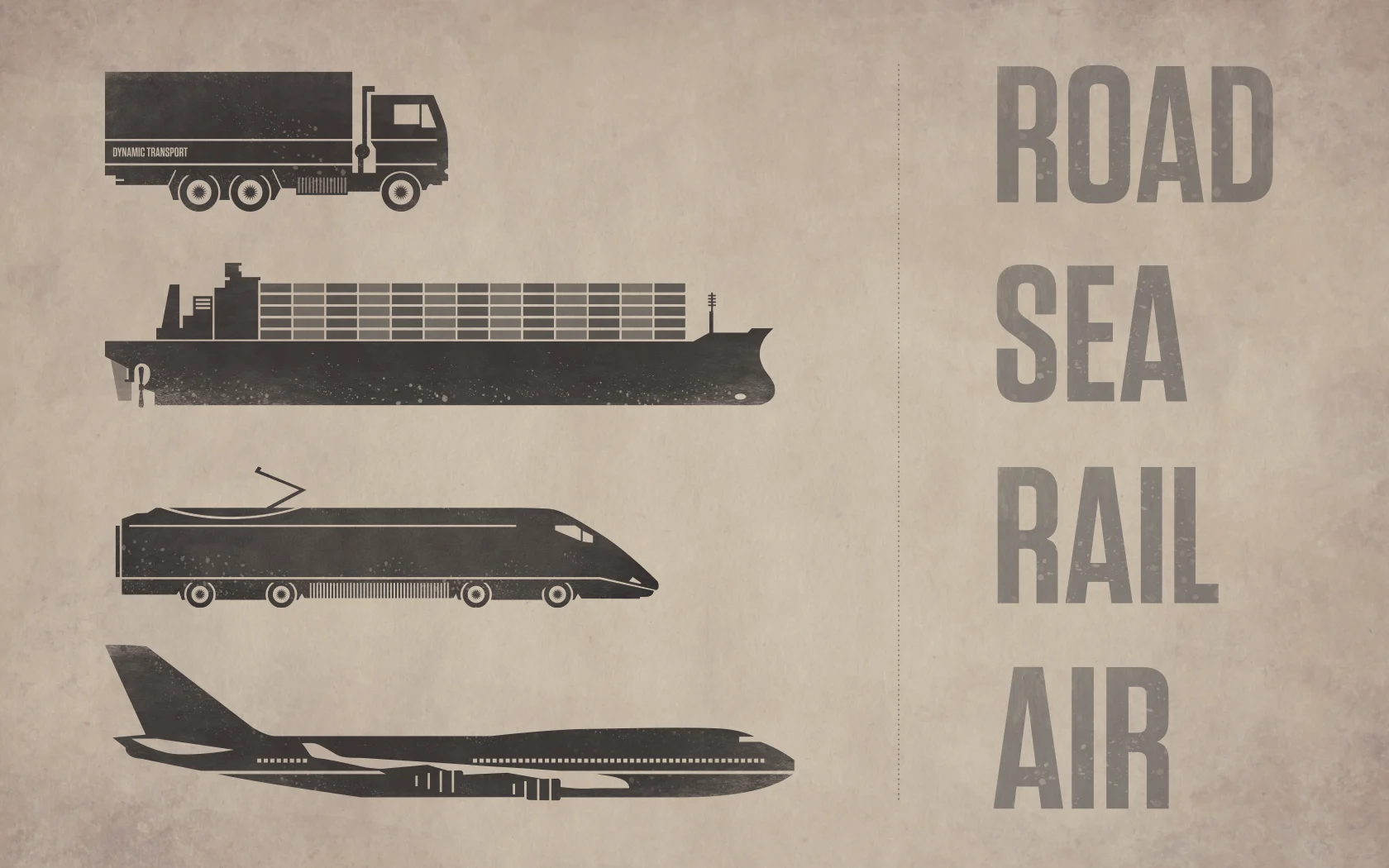
Today the history of almost any individual object that you see around you is a long and intricate chain of exchanges and links. From raw materials, manufacturing components, the assembly, packaging and transporting processes, that stretches across the planet. It is fair to say that almost nothing you see around you would exist without the transport infrastructures we’ve developed.
Every object around us implicates the world. It took a planet to make this room.
But what about the web? Why isn’t the web like the rest of the world?
The raw material that we work with is data - in all its forms - news, weather, tv shows, product information, the graph of our friends, the comments, reviews and Twitter posts that we create.
But until a few years ago, we operated as if we existed in a world before roads. Each site created its own data, its own information. Each site was a silo, an individual, unconnected city-state.
The first glimmers of change were things like Amazon’s web services, and then Flickr and delicious and Facebook and Google and Open Street Map and all the other services that have come along in their wake. The APIs that they provide are the roads between services. And they’re just as transformative.
They mean that each open site or service is another component that you guys get to build against. Every piece of data that someone adds to one of these services is available for you to work with. And as this network of data sources, services and interfaces slowly wires itself together, the potential range of things that are now possible to make increases exponentially.
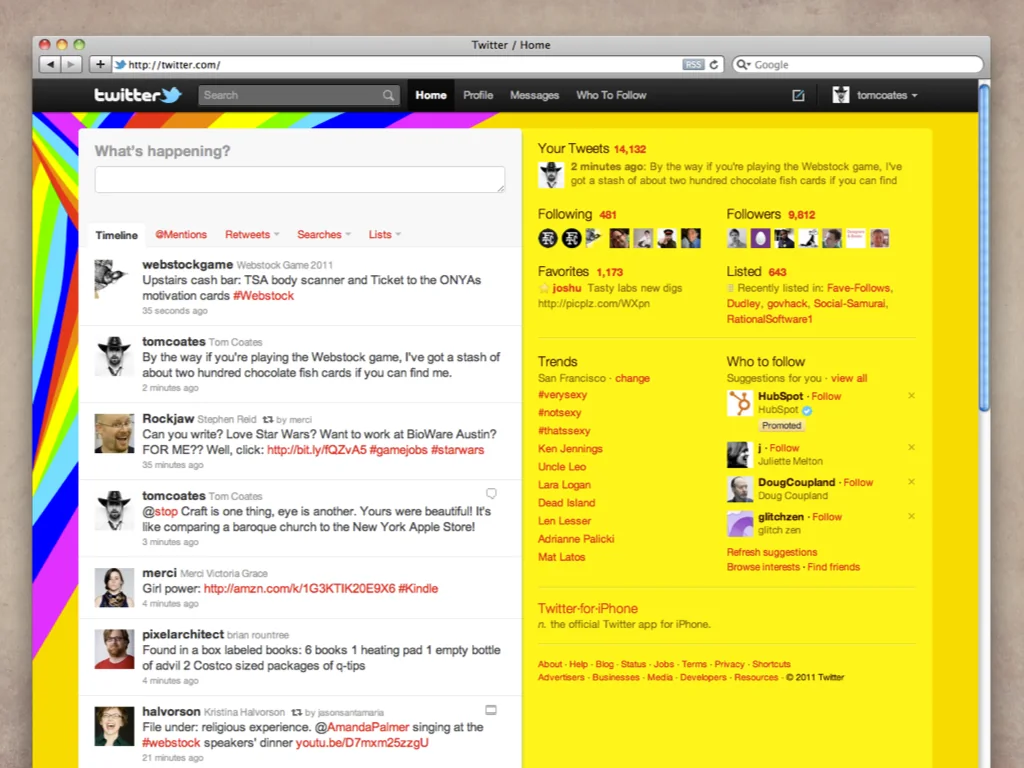
I think it’s now obvious to everyone that a site like Twitter is far from a simple website. It spreads itself everywhere, in its own apps on the iPhone and recently the iPad. Into SMS, into other people’s clients and services.
It’s become a distribution mechanism for all kinds of data, a source of geographical annotations, a social network that other people can build upon. It’s a true connected hub of the web of data.
So this is a project I’m tangentially related to at the moment - Simon Willison and Natalie Downe’s amazing Lanyrd. It’s an amazing, collaboratively created social conference directory that I honestly couldn’t live without.
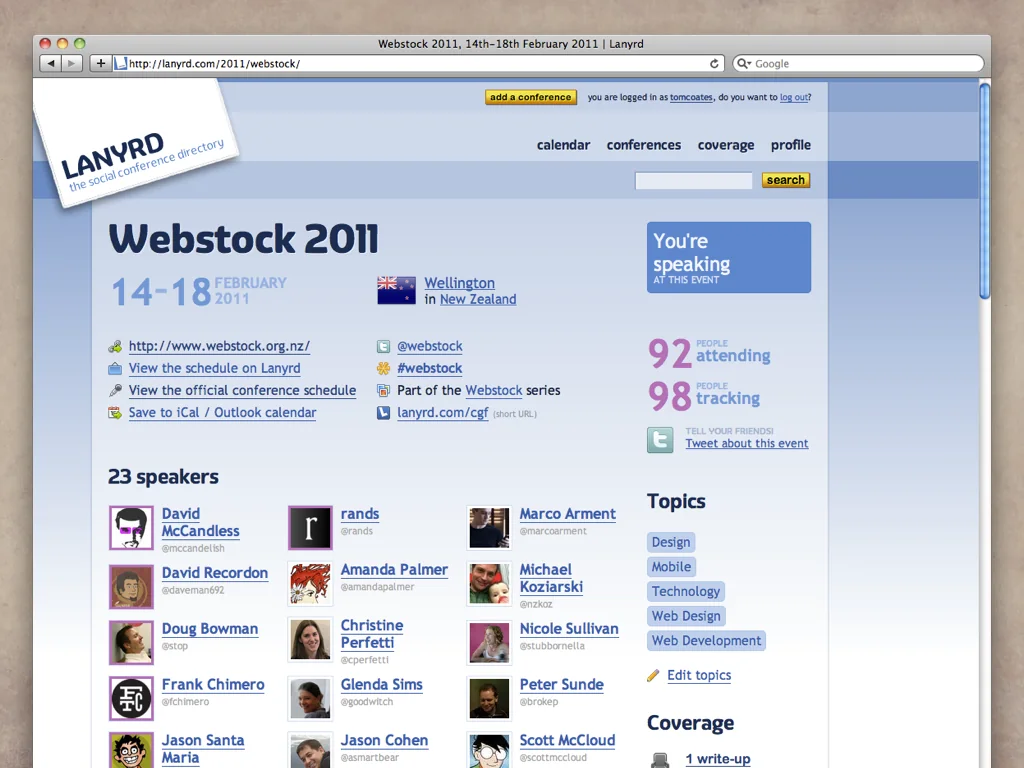
The important thing for me is that they built this project in an astonishingly short amount of time on top of APIs from (among others) Twitter, Yahoo’s Geo Planet functionality and Amazon’s web services.
If they’d built everything from scratch it would have taken much longer to build, and would have been much less immediately useful for all of us.
And more importantly, because they use your Twitter names, Yahoo’s standard vocabulary for places and Amazon IDs, what they’ve built can easily be a foundation for other people’s projects as well. They can all be hooked together.
This really is transformative.
And of course services like Facebook are brazenly making a play to be the social infrastructure for the whole web. They want to be the people that everyone turns to when they want social features on their site.
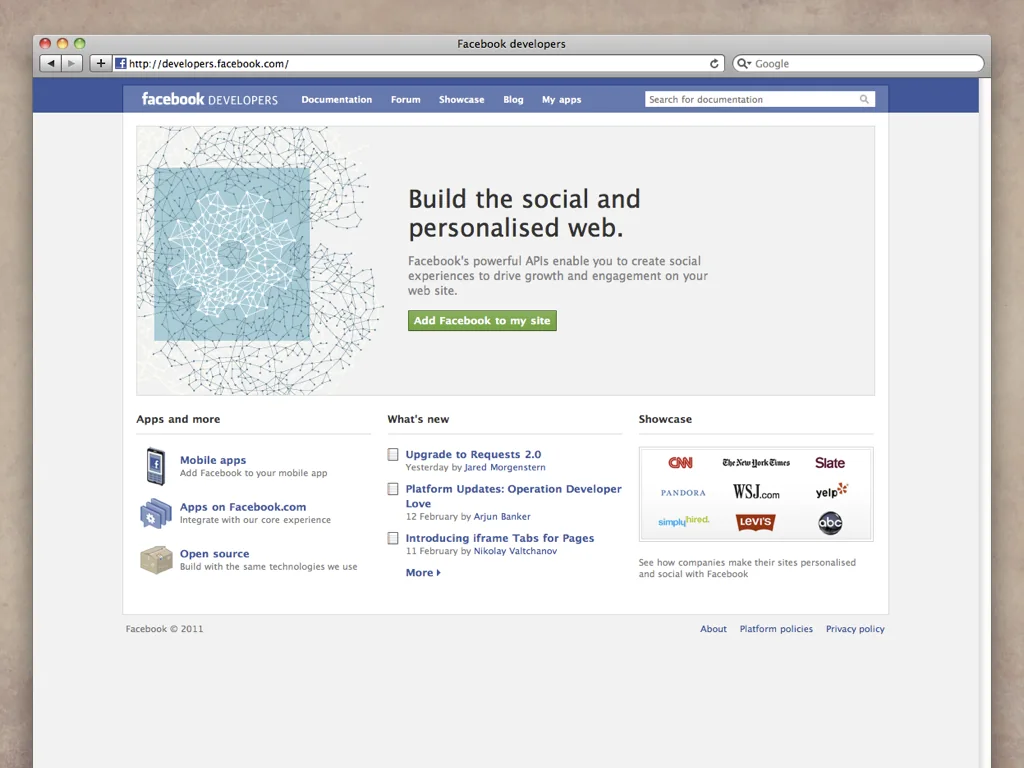
I’m starting to think that they view themselves like the social equivalent of your electricity provider, except that they’d quite like to be a monopoly. It’s impressive and ambitious, although it can be a little scary.
In fact, almost all of the tech trends of the last few years can be seen as core upgrades to this new network that is coming into being.
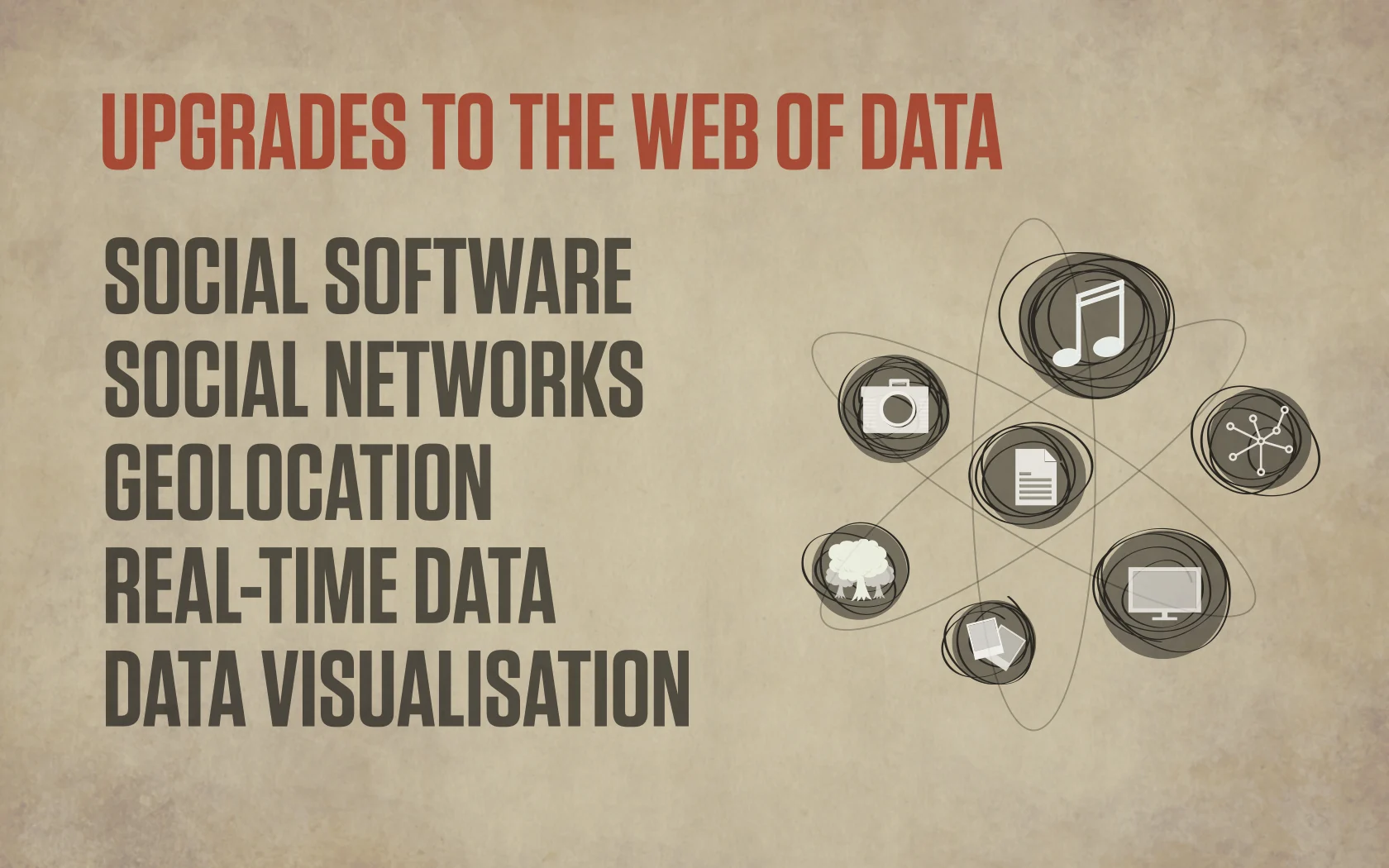
The social software that allows people to collaboratively create is adding information to the web of data.
The social network is another set of data - your relationships - that gives you a filter on all the things that are going on in the world. It’s only useful when it’s recombined with other kinds of data, and so it gets more useful the more open and connected it is.
Similarly geolocation software, an area that I’m particularly interested in, is about giving people the ability to take one atom of information, where you are, and recombine that with all the services of the world to make them more relevant or interesting.
Our interest in real-time data is, I think, about making the transport across the web more effective and rapid, and that in turn opens up all kinds of new possibilities that I’m afraid I just don’t have time to talk about today.
Even the recent explosion of interest in data visualisation is a part of this shift. As we get more and more sets of data that can be recombined, it becomes important to find new ways to make sense of it all, to traverse it, to see its possibilities.
But of course we’re not only talking about the web...
The network is now extending itself into objects!
I think it was Matt Webb who first introduced me to the history of the LCD clock and pointed out the lessons we could learn from it.
Clearly when they were first created, LCDs were not cheap.
Over time, however, the demand for LCD clock chipsets resulted in ever more efficient ways to produce them. LCD clocks started to appear everywhere, in video recorders, TV sets, cassette players, radio sets, car dashboards.
They appeared in places where a clock wasn’t even strictly needed, where they added a tiny amount of incremental value. And that was okay, because they cost so little.

Network technologies appear to be moving in a similar direction. Only a few years ago, the idea of a hundred pound ebook reader with a built in perpetual, world-wide free 3g wireless connection to the internet would have seemed extraordinary. Now it’s Amazon’s best-selling product.
It doesn’t do everything that a computer can do, and it doesn’t matter. It’s not a computer. The network connectivity simply does enough. It just adds more value than it costs.
We can expect those costs to continue to drop.
And as this happens we can expect more and more objects to come online, even if network connectivity only makes that device incrementally more interesting. From there we can expect these appliances to wire themselves up to the same ever growing web of data that is in the process of connecting together sites.
Now there’s at least forty years of academic work on pervasive computing. I wouldn’t have time to talk in depth about it today even if I’d read more than a tiny fraction of it. But there are a couple of contemporary ideas that I would like to bounce around a bit.
The first one is Bruce Sterling’s concept of a Spime - an object that reports its location in space and time. This is maybe a bit old now, but I still think it’s fascinating.
One of Bruce’s conjectures is that the very concept of ownership itself could be transformed if you always know where your stuff is at any given moment. Lending things to people becomes a much less socially awkward prospect if you can always keep track of where they are.
In the process, by creating objects that are uniquely identifiable and network enabled, a whole range of services can spring up to embroider and annotate them - potentially creating a personal online history for every networked object.
Another core concept is the idea of an object as a service, which takes Bruce’s ideas one stage further - in some places, the network can make it unnecessary to own objects at all.
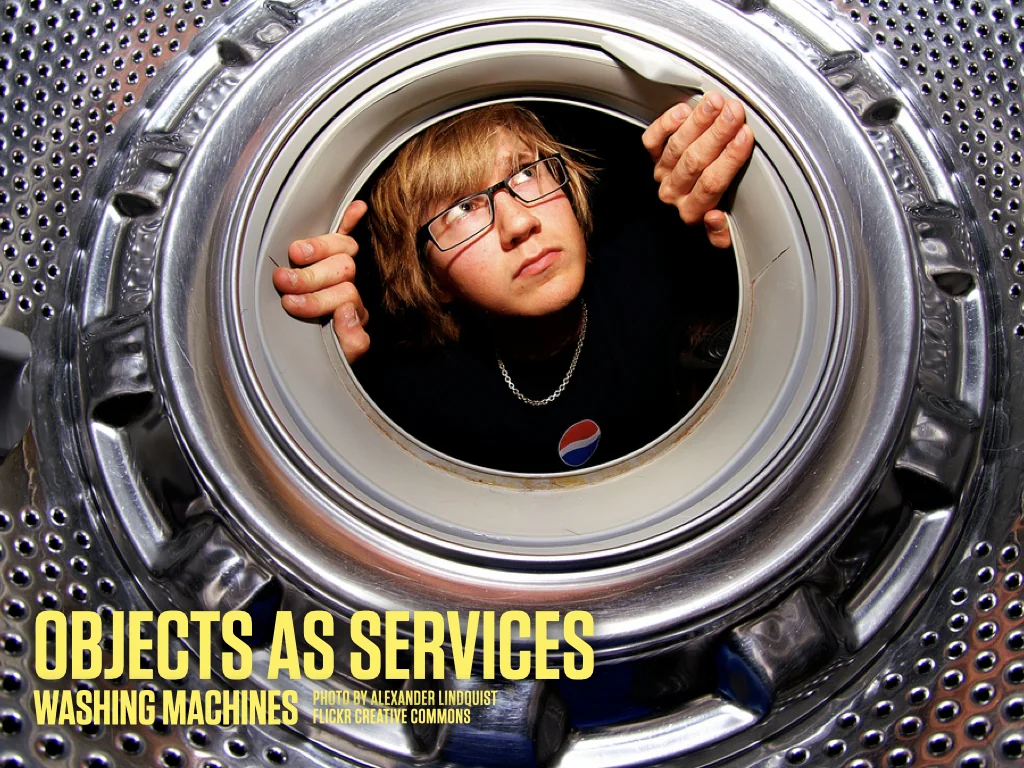
The classic example here is the washing machine. Why not get a washing machine for free in your home, but pay over the network each time you wash. The device can then be tracked to make sure it’s performing okay, replaced or serviced as needed, and data from it can give feedback to the individual, the company or to the wider web, where it can be aggregated and analysed.
We’ll see a little bit more of the Spime and Object as Service models in a few minutes in another context.
But first I want to talk about the idea that I think informs my sense of the future more than any other at the moment - Matt Jones’ and Jack Schulze concept of Mujicomp.
The technology side of connected objects is not entirely solved yet, but it seems clear it’s on the way.


The bigger question is how to integrate the network into objects in ways that make them attractive and useful.
That’s a question that Matt and Jack have been exploring.
Matt has described “sexy and desirable ubicomp - able to be appreciated as cultural design objects rather than technology - it should be tasteful, simple, clear, clean, contemporary and affordable in order to be invited into the home”. A lovely, practical vision.
I think there are a few examples of proto-mujicomp out there already, and so I’d like to give you a demonstration of something that I actually own and works right now, that ties into another potential source of interesting data - what Matt calls Personal Informatics and I call Instrumenting your Life.
This is a representation of a Withings internet enabled set of bathroom scales. It currently costs a couple of hundred of dollars NZ, but I think we can expect the price for comparable products to drop pretty dramatically over the next ten years.




When I stand on it in the morning, it weighs me, checks my lean mass and my... cough... fat mass - and sends it up to their site via my wifi network. It can distinguish between up to eight people in the same household, by remembering their last-weighed details.
It is a beautiful object, classily designed and packaged like an Apple product. This is a device that really wants to be invited into your home.
On their website, I can go and see my weight over time and my progress. As you can see, over the last few months I have become devastatingly more attractive.
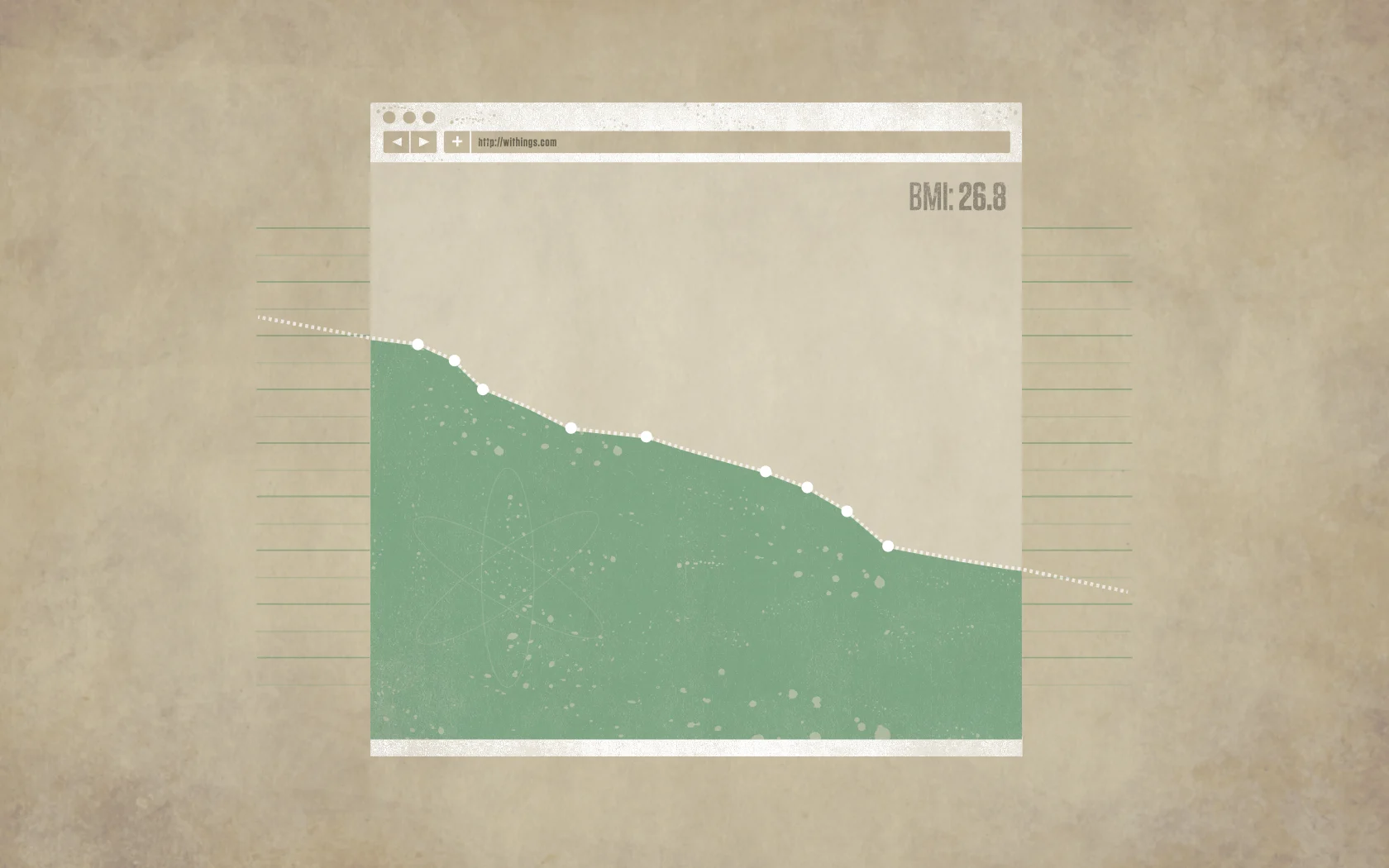
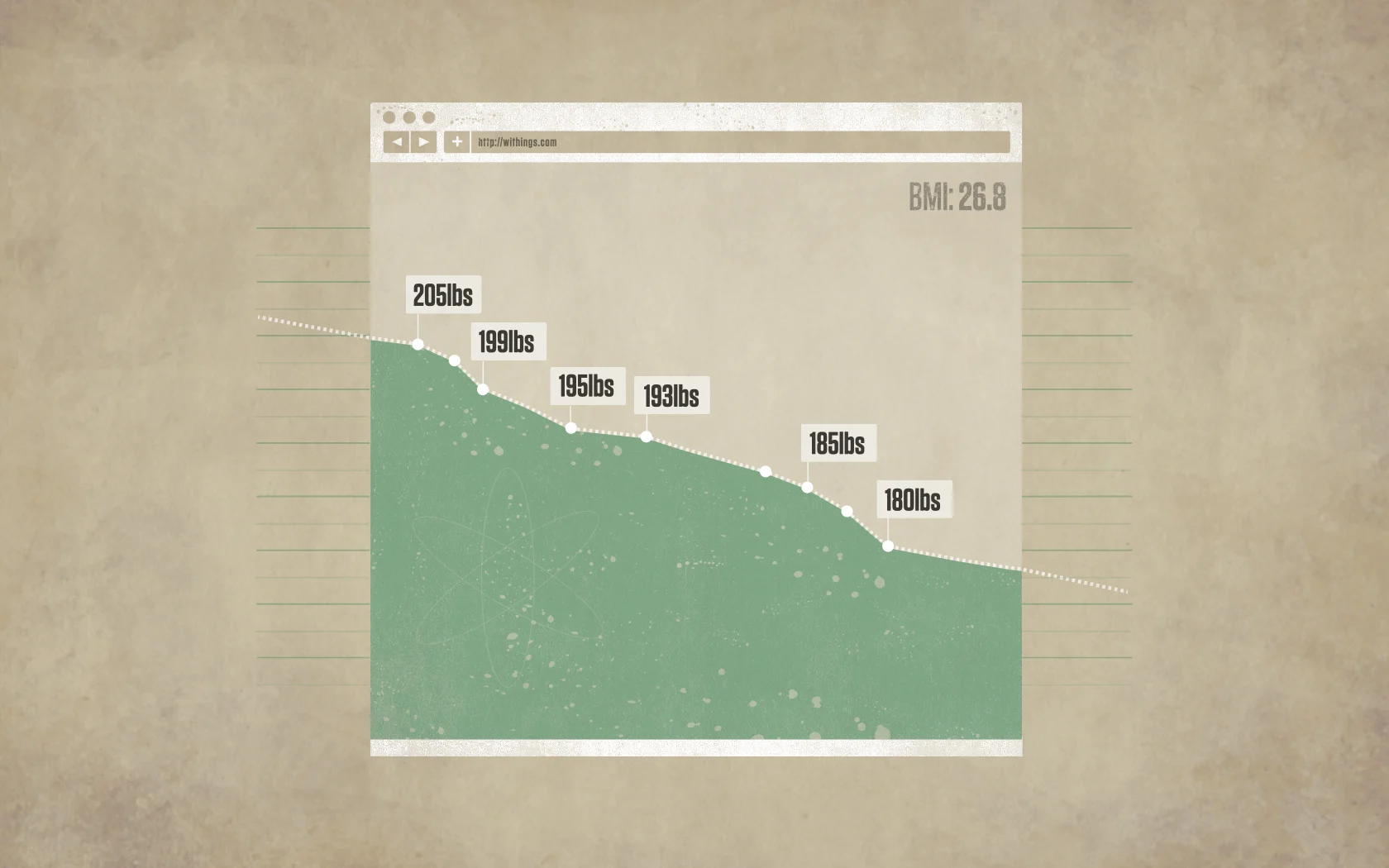
I have another, completely unrelated application on my iPhone that can connect to the Withings site. It’s called Weightbot. It also keeps a separate record of my progress.
It’s a gorgeous little app, and it’s actually a better and more convenient interface for seeing my progress than the website is, so I use it every day.
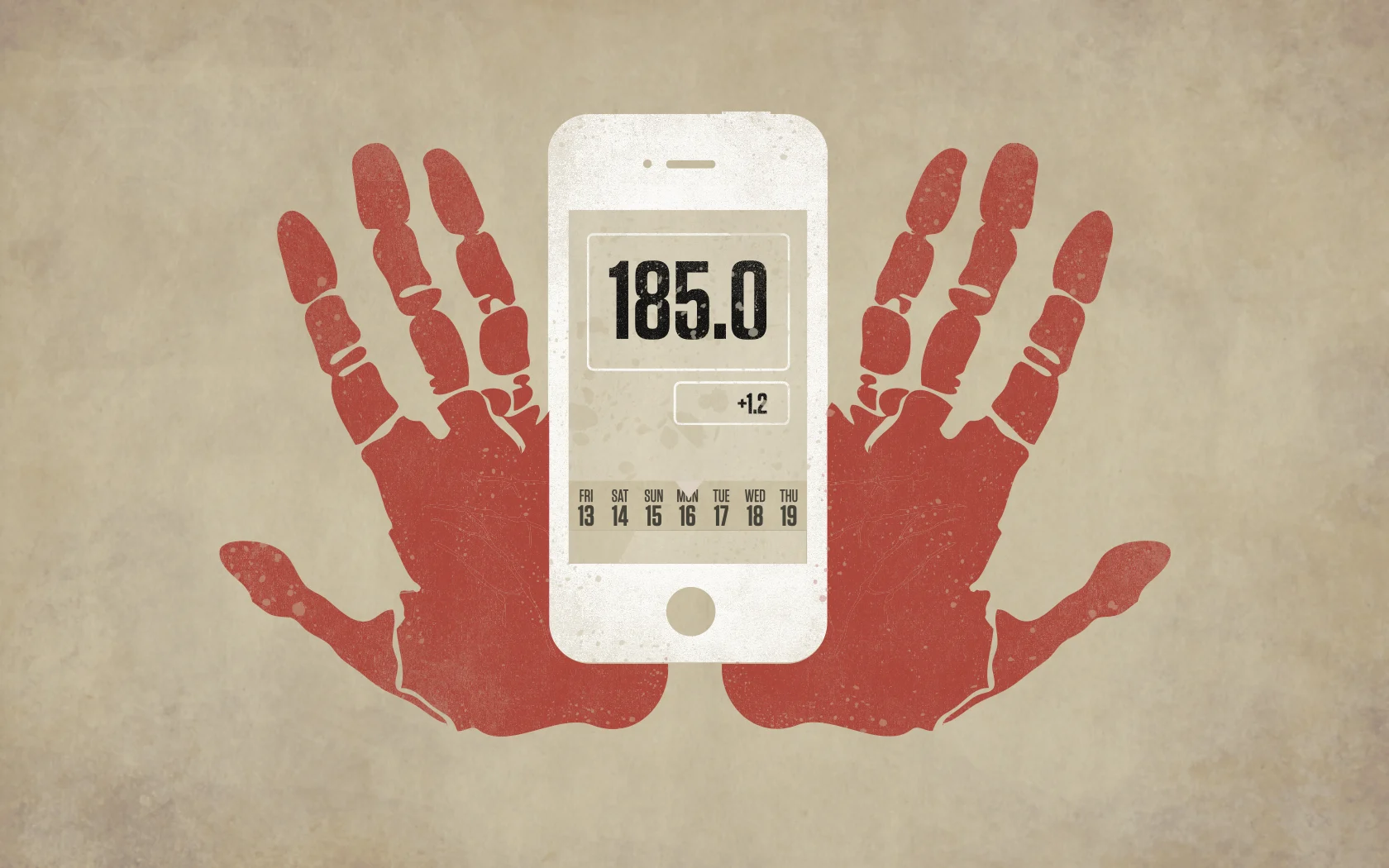
And the Withings site can also, if you want, post your weight to Twitter. I have a secret account where it posts my weight because I’m too ashamed for my normal Twitter followers to see it. You can find it at @howfatistom

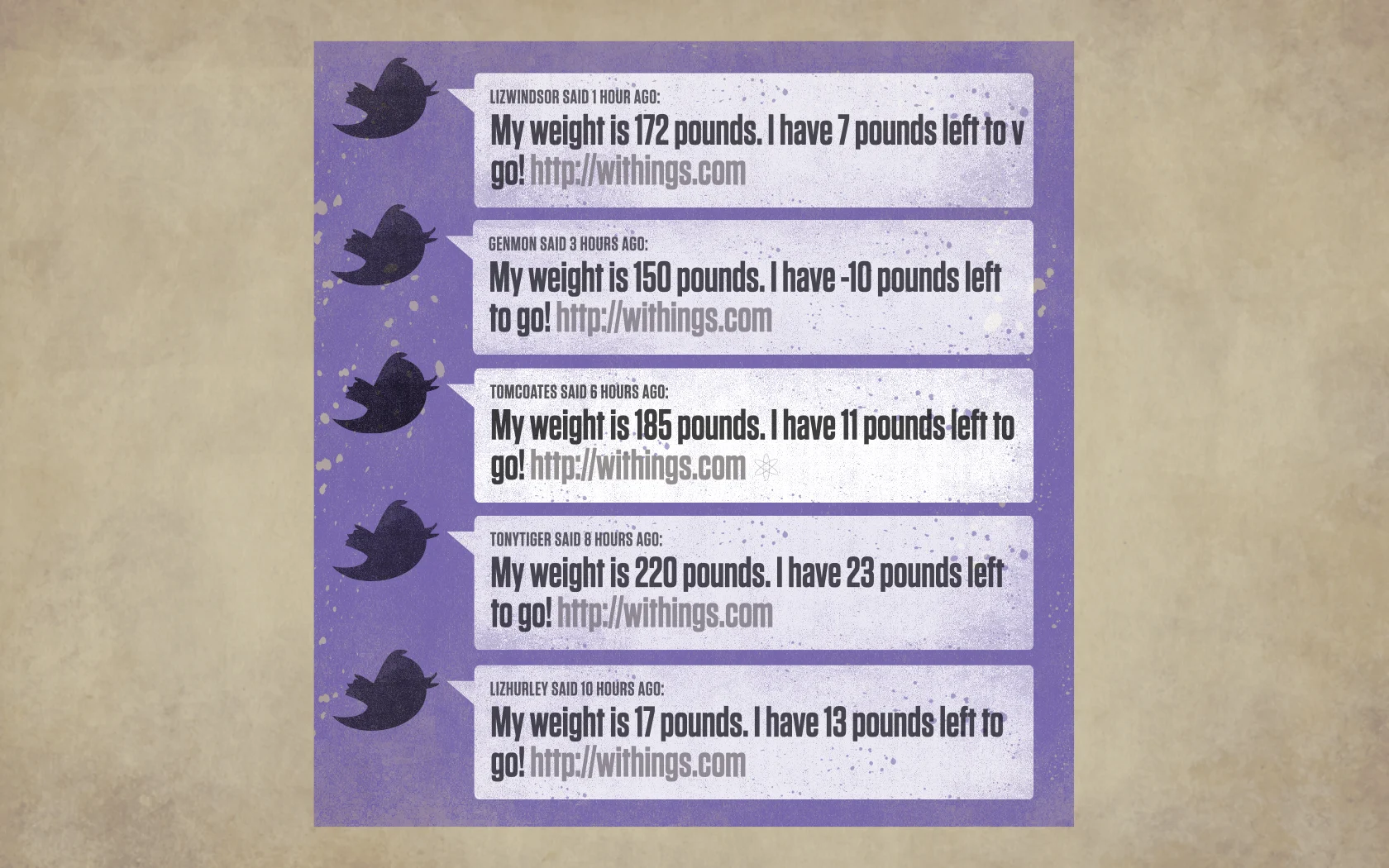
But here’s where it gets even more interesting. Because if you do a search on Twitter for withings, you’ll see thousands of other people putting their weight online in exactly the same way normally in a few set formats, generally as part of the process of keeping themselves motivated and to stop them eating great big piles of Chocolate Fish when they get bored.
Using Twitter’s APIs it would be pretty trivial for any programmer in this room to parse the results of that Twitter search and create a site that tracked how fat Twitter users were, and whether they were getting fatter or thinner. If they also got the user’s current location from Twitter, they could create a site that showed how that varied from place to place.
For anyone who is interested, the Twitter handle howfatistwitter is still available, although, to my delight, howfatistwitter.com has gone..net and.org are still available.
Now this is a fairly trivial example, but you could follow the chain still further. There’s no reason this weight data couldn’t be connected to data that comes from Nike+ or from Nokia’s Sports Tracker or from the Fitbit. There’s no reason it couldn’t be visualised on another service - say Google Health. Each service it can connect to makes that one fragment of data more valuable, and makes stepping on the scales in the morning more worthwhile.
Mike Kuniavsky in his wonderful design book for ubiquitous objects “Smart Things” talks about the possibilities for physical objects to become “service avatars”. Physical instantiations of online services in the real world. I think that’s a great phrase, and a huge opportunity for us all to explore.
Actually, it’s interesting that I chose to end this section by referring to a book...
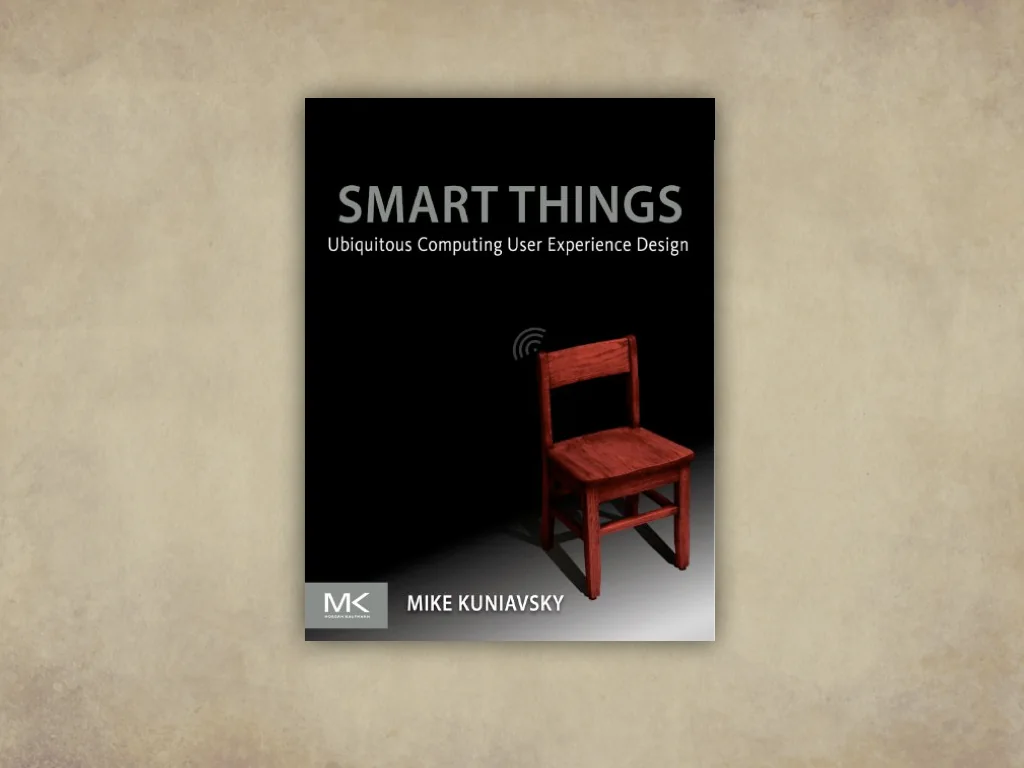
Because even objects that you would never suspect that would become network enabled are becoming so, albeit in unorthodox ways. The paperback book will most likely never have a continual connection to the internet, but when transferred to a Kindle or an iPad, scanned into Google Books or represented on the Open Library site, they suddenly become digital objects that can be annotated, expanded upon, wired up. Books, magazines, films, are becoming ubicompy just by ceasing to be physical objects at all.
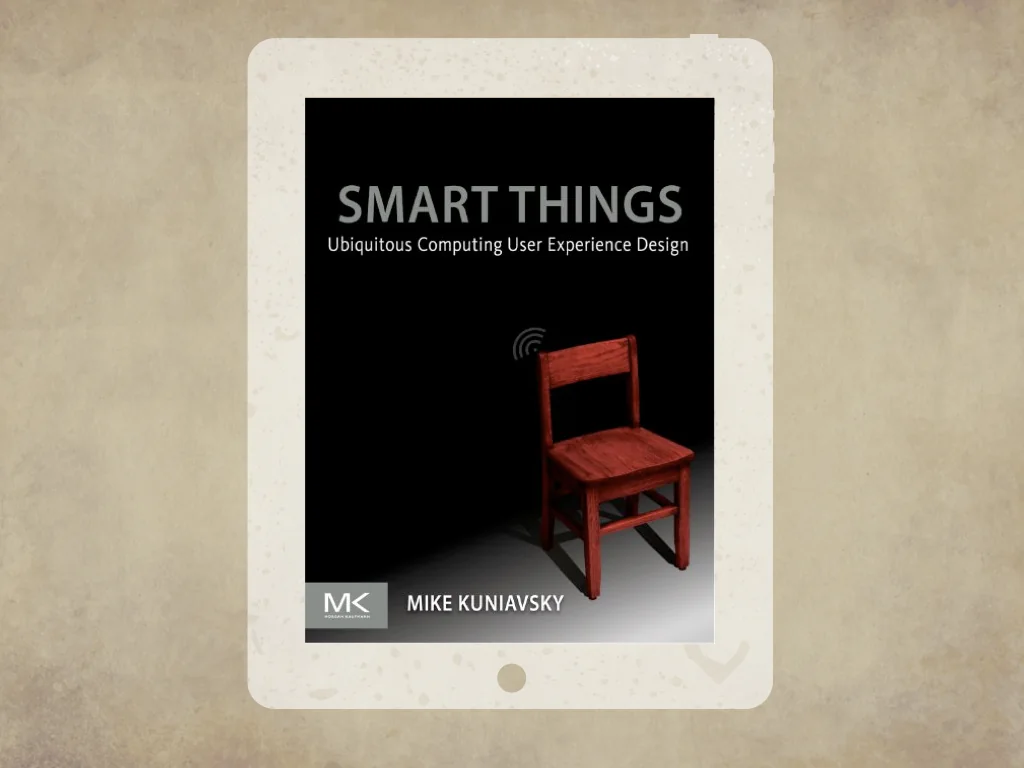
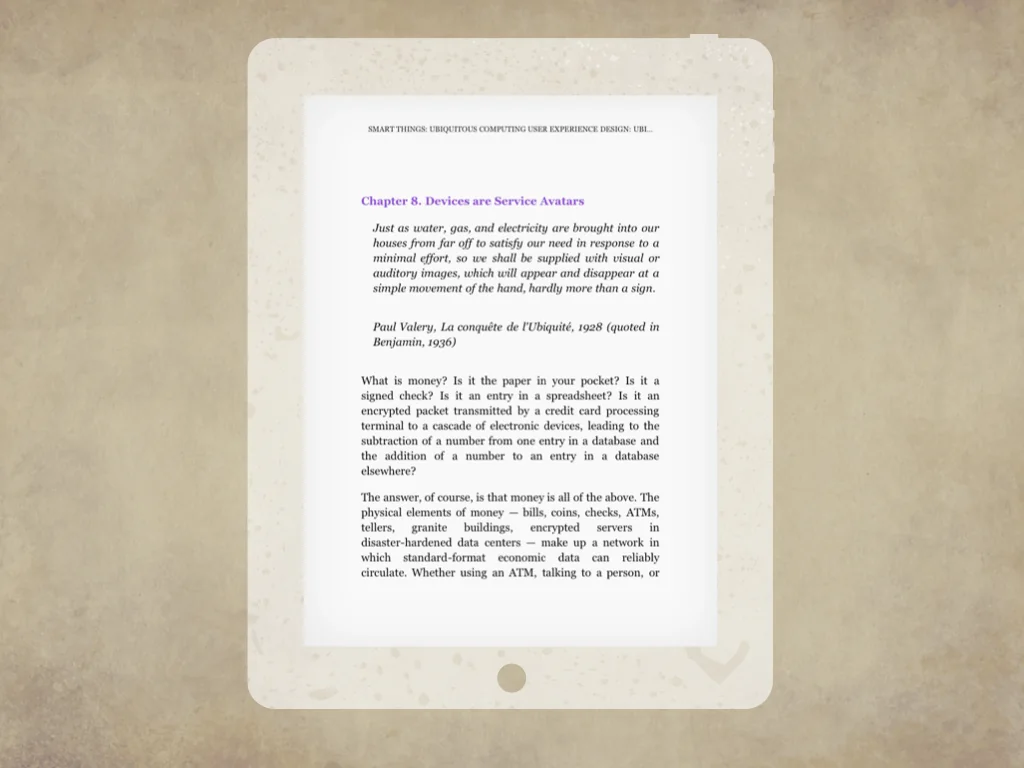
The kindle’s ‘Commonly highlighted passages’ functionality is a wonderful potential contribution to an understanding of books. And I can see loads of other ways that data around the book, how it’s read, how it quotes and references other books, when it’s abandoned, when it’s completed - could be hooked up to dozens of other services.
But of course simple objects are only the beginning - and again we return to Darius and his network. This time, though, we’re working to layer our new network over our old infrastructures - stretching it into our very environment.
We’re overlaying it over our buildings, our cities, our roads, our every day urban infrastructure. And in the process we have the potential to take cities to a whole new level.
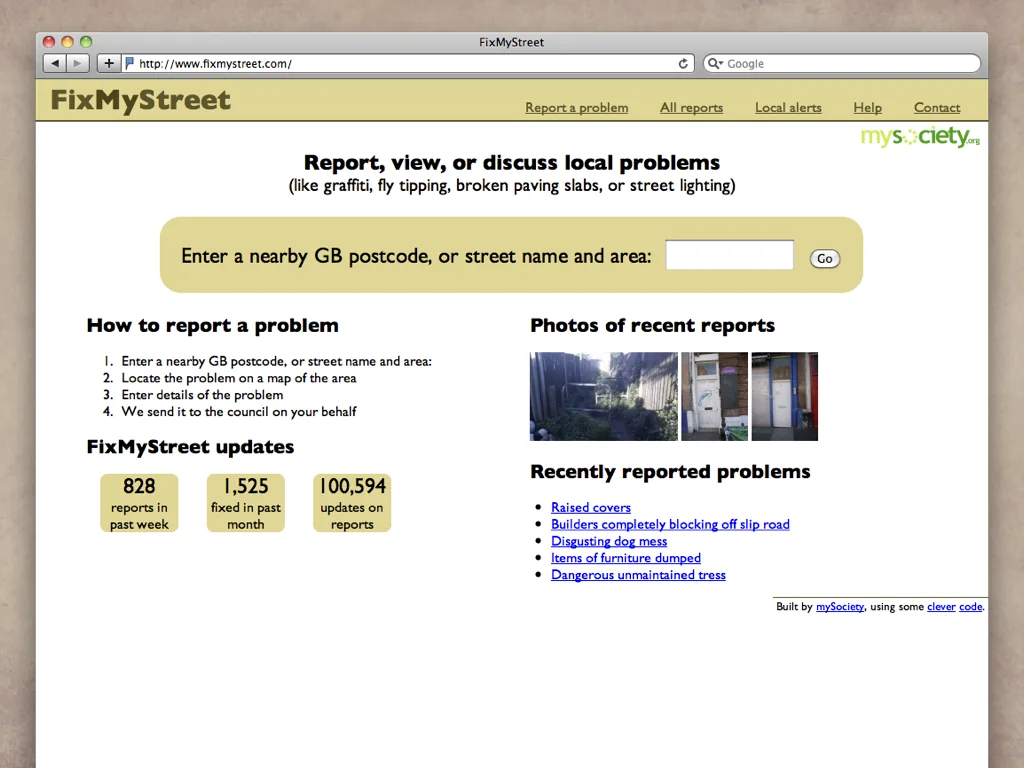
Now organisations like MySociety and - in the old days UpMyStreet - have been doing sterling work in opening up data about cities - data that’s recombinable and connected.
But fueled in part by US Stimulus money, there are a hundred nascent projects going on to take things to the next level. IBM and MIT are working on Smarter City projects, bringing the recombinable information of the web of data into the heart of the city. I apologise for the quality of the video here, but you can get a sense of what they’re at least gesturing at.

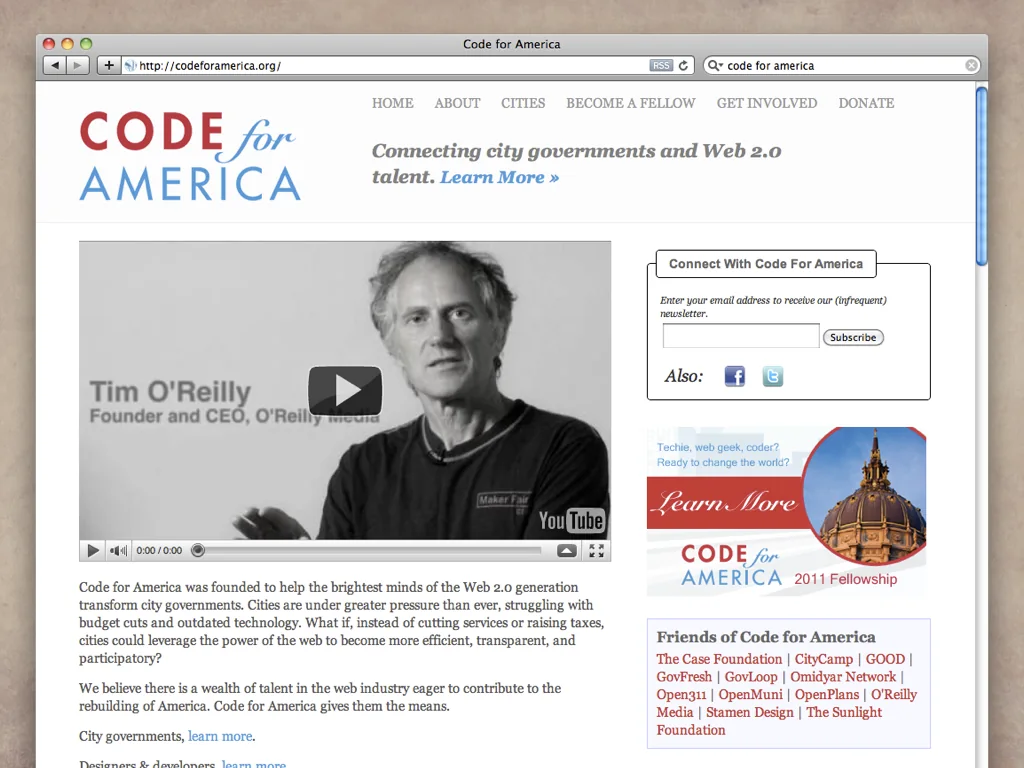
Similarly Code for America is making sterling efforts to help US cities think about what they could be doing to make their environments better.
And around the edges, fascinating people like Adam Greenfield, Ben Cerveny, Matt Jones again, Dan Hill and many, many others currently outside our community are starting to theorize what this networked urban future could be like.
But there are three projects I want to talk about in a bit more detail.
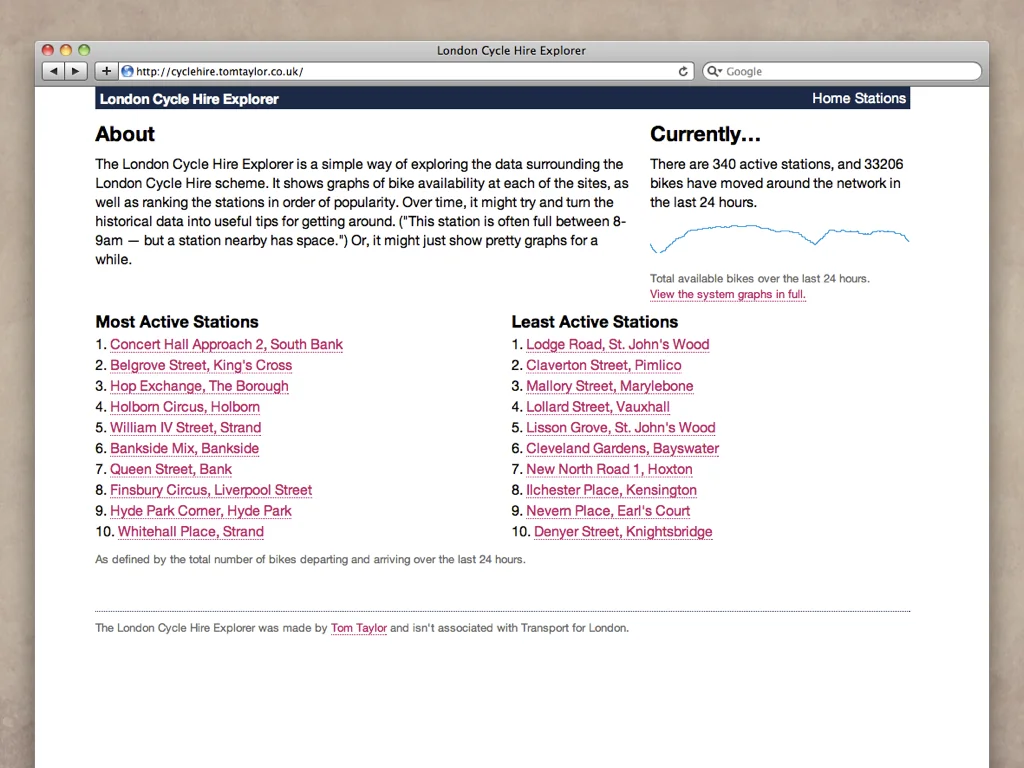
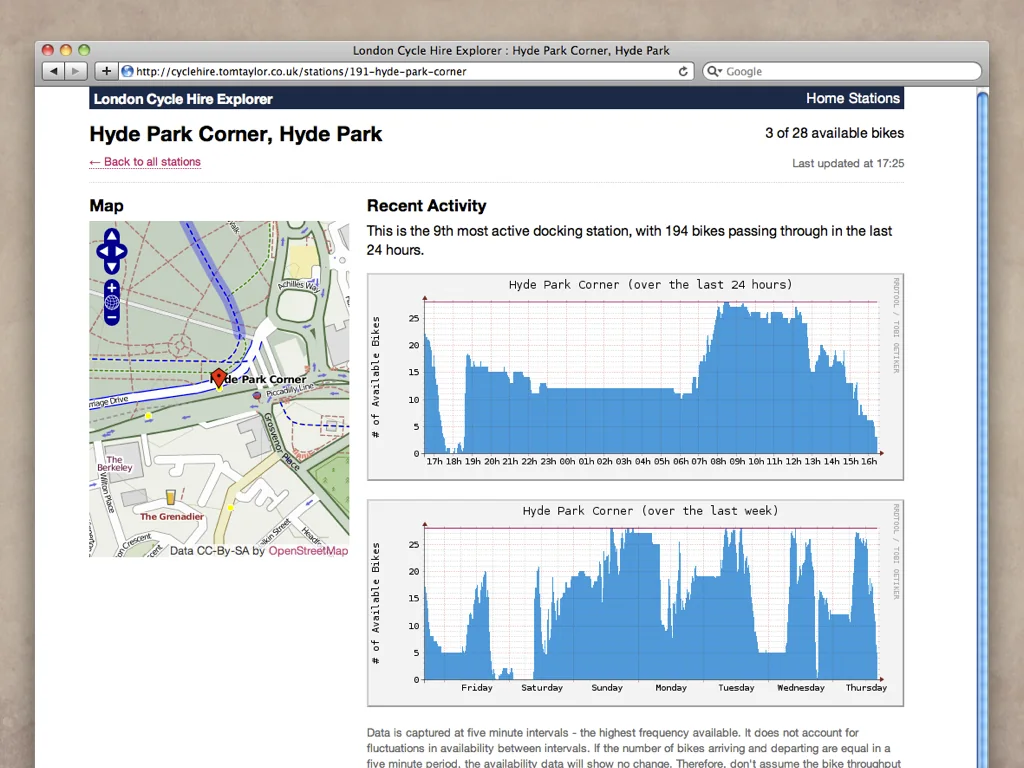
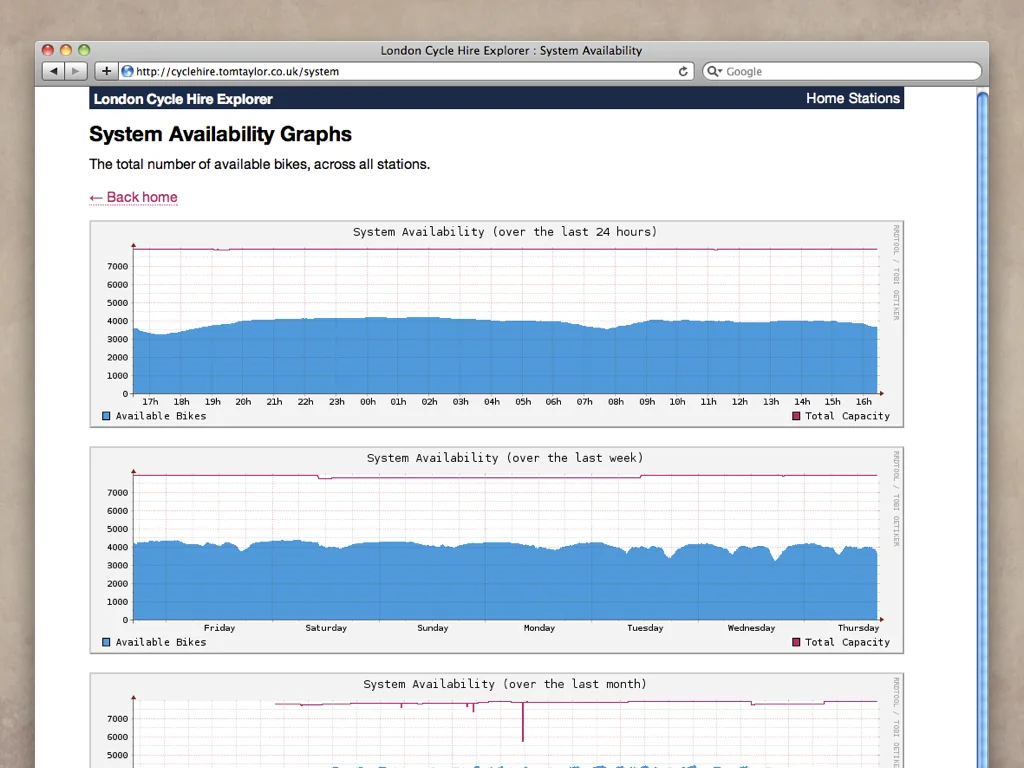
The first is the London Cycle Hire project, which I’m guessing you’re all familiar with. This is already a heavily networked piece of infrastructure that allows you to pick up a bike from any London station and take it to any other. Each bike is part spime and part ‘object as a service’, only laid out at city scale. I haven’t had a chance to ride one yet, but, although it pains me to say anything positive about Boris Johnson- it seems like a pretty cool project.

It’s been taken even further by Tom Taylor, who is here today, all the data from the service exposed in interesting new ways, so that you can explore and navigate in more detail. Just think about the possibilities of recombining this with other services - weather services, tour-guide services, personal exercise health tracking services.
Here’s a similar service that’s being trialed in San Francisco at the moment. They’re instrumenting the parking spaces of the city to deal with congestion and with problems parking.
Every parking space in certain areas is equipped with a sensor that can tell if the space is taken.
You can go and review online or on your phone where there are spaces.
And each month, depending on the demand they’ll adjust the price of the parking so that, on the whole, on any city block, there’s at least one parking space free.
It’s a fascinating way to optimise a city by laying the network over it.
And one of my favourites takes things to the next level, by actually treating the built environment as a canvas on which you can show the workings of the city. This is a proposed project for the 2012 London Olympics by the architecture firm Arup. It is sufficiently insane to make my jaw drop with wonder, but unfortunately not insane enough to have been, in the end chosen.
It’s a huge literal cloud of orbs that would have been built above the Olympic village, used as part of a system of urban informatics that would capture information about the city and the environment and becoming a canvas upon which that information could be displayed at civic scale.
A huge smart meter display hovering over London, filled with information about what people were doing around it. I mean, it’s totally nuts, but much like Concept cars can point to the future, you can expect to see much more of this kind of public display of information.

In fact you can expect to see a lot more of a lot of things in the city - the instrumentation of buildings, cities, streets, capturing information about traffic flows, temperature, power consumption, building sized displays, programmable environments, responsive facades, and reactive buildings that change to sensor information around them or to shifting data tides on the web.
Our very environment is becoming network aware, writing to, reading from, visualising and reacting to information on the growing web of data.
So when I’m talking about the web of data, this is the kind of stuff I’m talking about. Sites talking to one another, building off each other, physical objects writing to and responding to information on the web, an instrumented planet, a responsive planet, a connected planet.
The world I’ve talked about is already here in its earliest forms. We’re slowly wiring it together, one connection at a time. It’s a new network built on top of the old. A network of sites and services that lets data flow through the world, an animating spark making everything more useful, fun, efficient - escalating the speed of change.
This is a great quote from Matt Ridley’s new book ‘The Rational Optimist’, which talks about cultural evolution and what makes it possible for us to make cameras and mobile phones where other animals cannot.
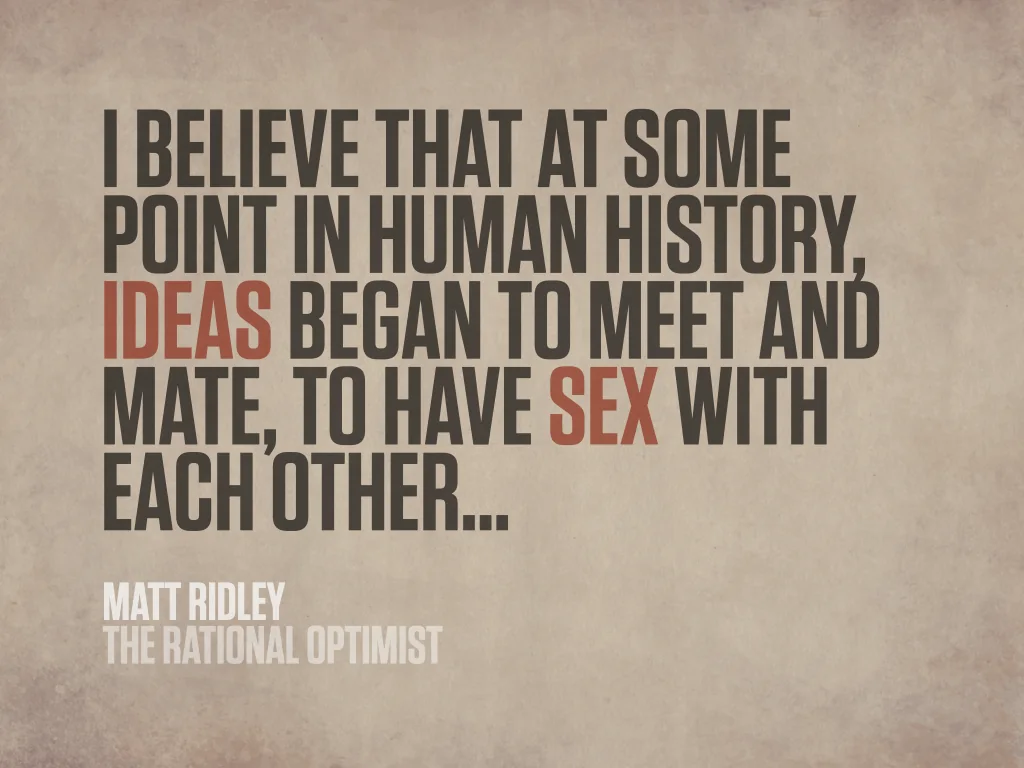
He believes, as do I, that it is the networks that we build that make it possible for physical goods, informational goods and data to recombine in interesting ways. He asks us to imagine the evolutionary possibilities that occur when ‘ideas have sex’.
I want to take that a bit further. If we imagine a world where network connectivity is wide and cheap, where its components are tiny and easy to incorporate into things and we imagine objects in the real world writing to and reading off this new network of connected data that we see behind the scenes, manifesting on surfaces in the city, on screens in the home, on mobile devices, endless new possibilities for recombination emerge. So the question there, in a networked world is...
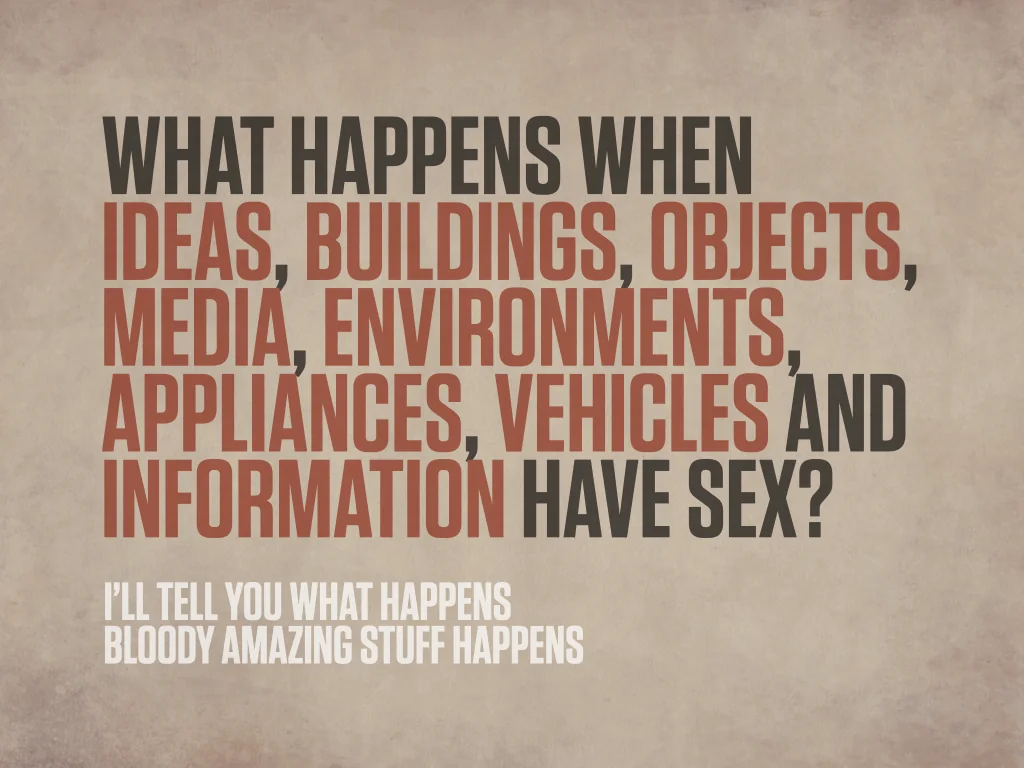
I’ll tell you what happens. Bloody amazing stuff happens.
And it’s this future full of inter-site, inter-object and inter-environment sex that inspires me, that makes me wonder what astonishing things we’ll collectively make that we’re just seeing the first glimmers of today. It’s a future with extraordinary creative possibilities.
But it’s not all going to be plain sailing. There are things we’re going to have to work on if we have any chance of bringing it all together.
I’m going to be a bit controversial now and I want you all to work with me. I’m going to put up a statement and those of you who agree with it, I’d like you to cheer. And those of you who disagree with it, I’d like you to boo.

Haha. Interesting!
So this is, I think, our first problem. The Semantic Web.
I need to be clear. I have no problem with the technologies of the Semantic Web or of the Linked Data crew. You should go and read up about it. It’s interesting stuff. And the vast majority of people using these technologies are sensible, practical and creative people.
But at the heart of that community is a hard core of people with a dogmatic vision of how we’re going to use those technologies to wire the world together - a view that crowds out alternatives. And I think we have to resist that.
This may be a prejudice of mine and it may be unfair, but that hardcore at the middle of the semantic web community appears to me to look at the future web as one potentially enormous topography that you can make sense of only from above.
It’s a world that encourages people and companies to have their data exposed in public primarily so that it can be crawled and deductions made from it - activities that—in my opinion—minimize the value to the organisations publishing data, and maximize the value for huge multi-national search engine companies.
But it seems to me though that the people actually out there building services think of the web in a more dynamic way, with information passing between individual services, with companies or individuals participating because they feel it makes personal practical or business sense for them to do so.
Using whatever technology works best for them.
With conventions emerging and evolving as the needs of the community become clear.
Some may choose to use RDF and OWL and SPARQL. Others may not.
And let the best approach win. It’s a much more devolved, distributed philosophy that we’ve seen working at Flickr and Twitter and Lanyrd and Facebook and Last.fm and thousands of other sites.
The goal of a connected web of data is, I believe, a profoundly important one. And because it’s so important, we can’t leave it in the hands of any one community. It belongs to all of us. So I want you all to repeat after me: a web of data by any means necessary.
This, by the way, is a clip from a BBC TV programme showing air traffic over Britain over 24 hours. Nodes and connections and movement between them. We’re back to Darius the Great and his great transport infrastructures. It’s astonishingly beautiful. Turns out the web of the future really is a system of tubes. Or wires. Or roads. Or flightpaths. Or people in towers shouting at each other.
Another problem that we’re confronted with is again a weird mix between technology and culture because if we’re going to truly wire the web together there are some projects that we’re going to have to collaborate on for everyone’s benefit.
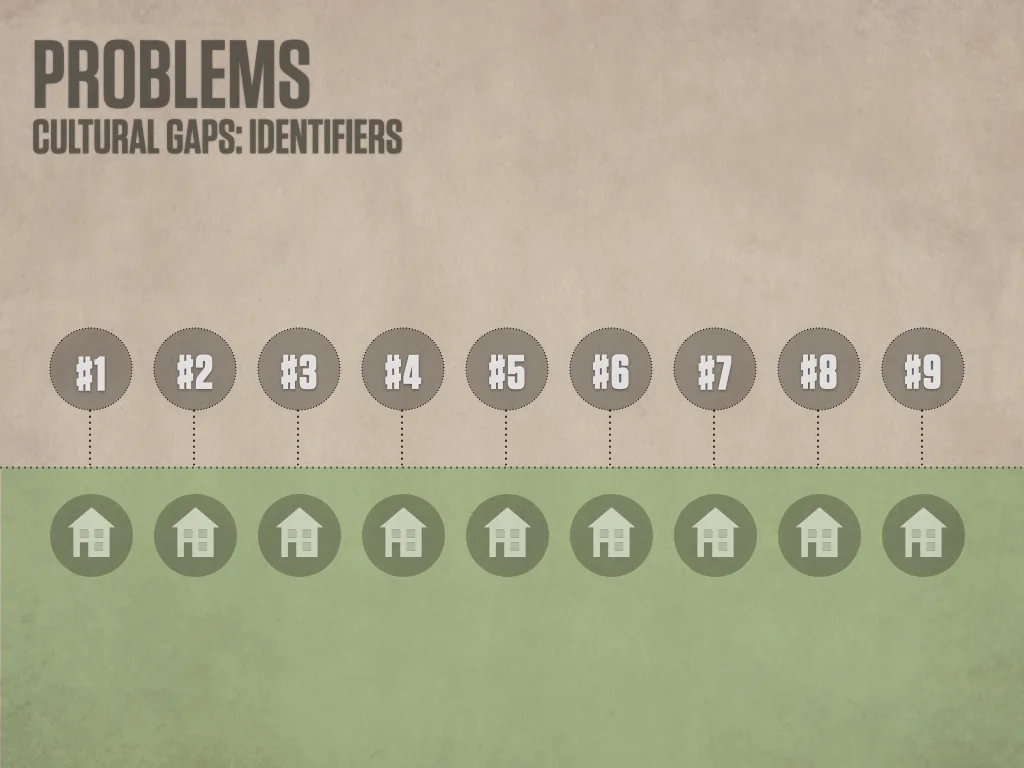
We need open projects to create identifiers for non-web native objects - things like songs, films, tv shows, buildings, businesses, books. We need to agree how we’re going to refer to them collectively.
If we don’t do that we can’t hope to unite all the information around them, we can’t talk about them collectively, we can’t annotate them effectively, we can’t instrument them usefully.
Large companies have come to understand that we need web standards and open source software if we’re going to truly make the most of the web, but they’ve yet to figure out that there are other open projects that are just as necessary for the whole industry to progress.
Rising tides lift all ships further than any could reach alone.
It’ll take work to move us past this short-term thinking.
But it’s in some larger areas that we have to do the most work, and be the most careful.

We’re currently in the process of negotiating a new definition of privacy - not simply one based on a difference between what’s physically visible or hidden, but one based on what we decide it is reasonable for another individual or company to know about us.
I don’t accept the idea that privacy is dead, in fact I think we could be entering a golden age of privacy where unspoken assumptions are brought out into the light of day and examined. There is the possibility for us to come together as users, technologists or even as states to codify more clearly than ever what’s acceptable and what’s not.
But there is a line - rights have to be defended all the time because rights are under attack all the time. That’s as true now as it has ever been. We will have to work to get the world we want.
And perhaps the most important of all.
While trade and transport has brought many wonders to the world, and pulled billions from food scarcity, subsistence farming and disease - I think we all know that not everyone has benefitted equally from an increasingly connected world.

The same may be true on the future web. People will try and own and dominate data spaces - Facebook’s already trying to do that with the social network. There will be times when we need as a society to put limits and protections in place, where we need the law to intervene.
But you know what? I have faith in people.
We’ve accomplished a hell of a lot over the last few thousand years. And moreover, if there’s any community that aspires to the best, that looks towards self-expression, self-realisation and positive creation - if there’s any community that can work to address these problems - it’s the people of the web.
I have faith in the optimistic vision and creative power of the technology and design communities to rise up and take on these problems.
In particular I have faith in you, the thinkers, designers, builders and product makers of the next generation of the web.
This is a visualisation from itoworld.com of a year of contributions to Open Street Map - a free to use, open map of the world created by thousands of people like you. Data about all the roads of our massively connected planet. Open data, for anyone to build on, recombinable with anything you want. Connectable with any site or service, object or environment. If this doesn’t give you hope for the future, then I don’t know what could.
This is an amazing project, and a core node of the new network we’re making. And I genuinely believe that in the creation of this new network we’re making a new world, we’re extending the possible.
We’ve come a long way from Darius’ transformation of Persia, but the principles remain the same. Connecting things transforms the world. And we’re connecting more and more things every day.
We’re building the new infrastructures that the generations that come after us will build upon and extend. We’re the road-builders of the 21st Century. And this challenge is what motivates me, informs my design practice, inspires my creativity.

The planet and everything on it is both our canvas and our brush. Everything the network touches is our playground.
And that’s all I have. Thank you.