
Barbelith began in 1998 as The Nexus, the discussion area attached to The Bomb, my collaborative annotation site for Grant Morrison's The Invisibles. The conversations quickly escaped the boundaries of one comic. People wanted to talk about politics, technology, sexuality, identity, art, books, music, film, magic, protest and each other. The forum became Barbelith Underground: a broad, deliberately thoughtful online community with the tagline “Subcultural engagement for the 21st Century.”
I founded, designed and ran Barbelith. I set its editorial and community model, designed its information architecture and interface, and worked with Cal Henderson, who wrote the custom forum software that made its more ambitious mechanics possible.
A community with a point of view
Most message boards of the period were organised around either a single subject or a largely undifferentiated stream of chat. Barbelith was designed as a collection of distinct but connected public spaces. Each forum had its own subject, tone and group of volunteer moderators; together they made room for serious discussion without requiring the community to become solemn or uniform.
Topic authors were asked for both a title and a short abstract. That small piece of friction made the purpose of a discussion clearer before anyone entered it, improved browsing, and left a more useful archive. A public Policy & Help forum made arguments about the rules part of the record rather than hiding them in private administrator conversations.
Designing governance into the software
The most distinctive part of Barbelith was its distributed moderation system. Members could propose that a post be edited, a topic moved or a user moderated, and they had to explain why. The proposal then went to an appropriate group of volunteer moderators. No single moderator simply rewrote the conversation: several people considered the action, voted independently and collectively decided what happened.
The model was intentionally slower than giving one administrator absolute control. It protected the continuity of discussions, reduced the scope for personal bias, shared a large operational burden and made members stakeholders in the health of the place. I was subject to the same workflow as everyone else.
The interface kept changing
Barbelith was also a long-running visual design project. I explored multiple skins and structural models for the same conversations: dense and spare layouts, single-colour and rainbow systems, explicit author columns and flatter reading views. The 2004 studies below were attempts to make a large, complicated community feel legible without sanding away its character.
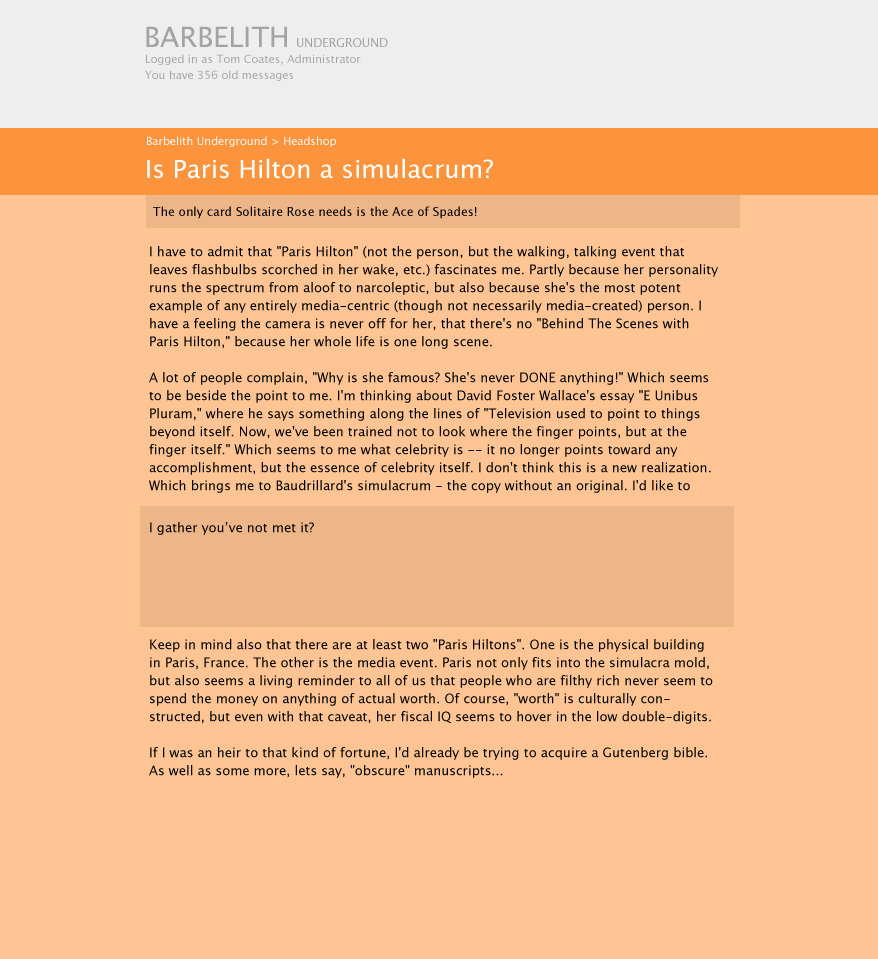
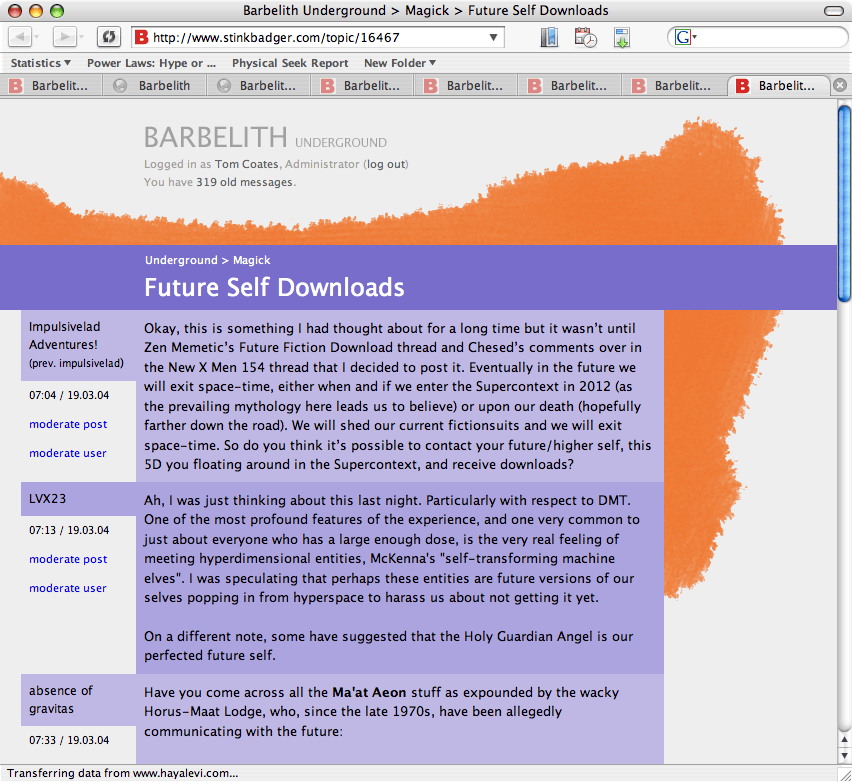
The colours were expressive, but they also carried structure. Different areas and states could feel related without becoming identical. The visual system helped a reader understand whether they were scanning topics, reading a discussion or participating in the administrative life of the community.
What lasted, and what did not
Barbelith became part of people's lives. Members made lasting friendships, collaborated on creative work, organised events and carried conversations into other communities. The project has since been discussed in books about participatory culture, fandom and online community, often because its governance model was more ambitious than the software around it suggested.
It also taught me a harder lesson: distributing decisions is not the same as distributing operations. The community could share moderation, but the software, hosting and admissions process still depended too heavily on a small number of people. As my own time became scarcer, that dependency made the system difficult to sustain. Good community design needs succession, maintenance and operational resilience as much as it needs thoughtful interaction design.
Barbelith is now preserved as a read-only archive. What remains is both a record of an extraordinary group of people and a practical experiment in how software can turn values into everyday behaviour.
- Role
- Founder · Product and community design
- Collaborator
- Cal Henderson · Engineering
- Focus
- Community governance · Publishing · Moderation